

This library and any plant lists generated from it reflect plants we’ve carried or could obtain over the past 12–18 months, not our current inventory or availability.
“Fire Wise” plants are not fireproof. These plants, when maintained properly, have a higher fire resistance reducing fire danger. This list is built on the recommendations of local governments and the Diablo Firesafe Council

Black Stem Elephant Ear
Colocasia fontanesii

Height: 6 feet
Spread: 6 feet
Sunlight:


Hardiness Zone: 7b
Other Names: Cocoyam, Dasheen, Taro
Description:
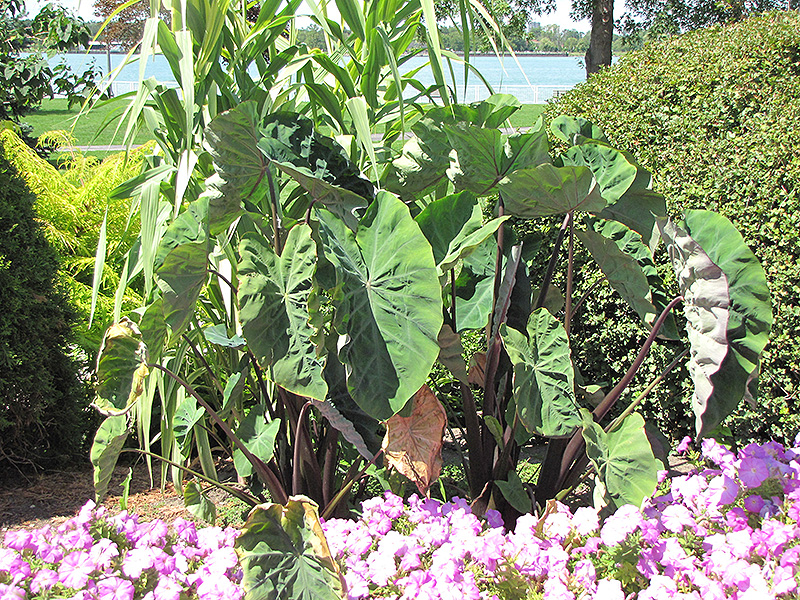
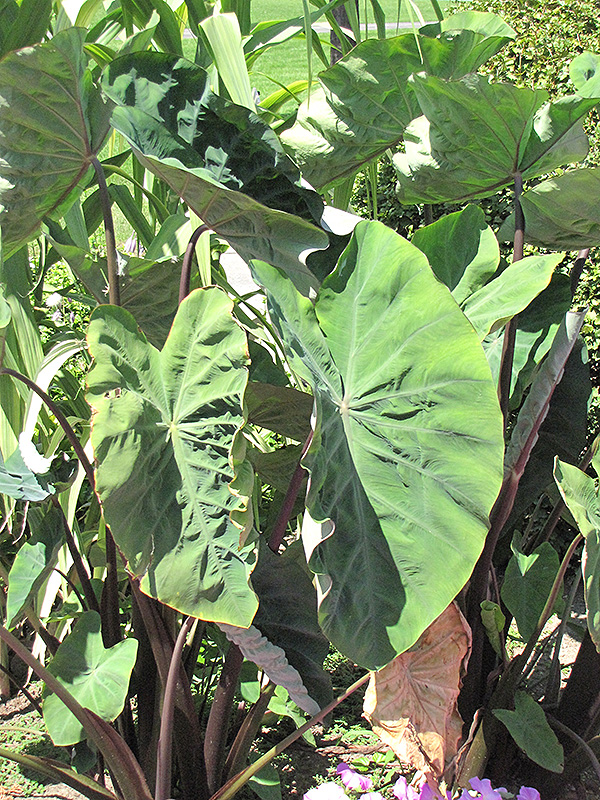
An impressive tall variety with dark black-purple stems, topped with huge leaves that emerge dark plum purple and then mature to dark olive green with purple spines; a stunning garden or pondside accent plant for a tropical look
Ornamental Features
Black Stem Elephant Ear is primarily valued in the landscape or garden for its cascading habit of growth. Its attractive large heart-shaped leaves remain olive green in color with pointy purple spines throughout the season.
Landscape Attributes
Black Stem Elephant Ear is an open herbaceous tropical plant with a shapely form and gracefully arching foliage. Its wonderfully bold, coarse texture can be very effective in a balanced garden composition.
This is a relatively low maintenance plant, and should be cut back in late fall in preparation for winter. It has no significant negative characteristics.
Black Stem Elephant Ear is recommended for the following landscape applications;
- Accent
- Mass Planting
- General Garden Use
- Container Planting
Planting & Growing
This plant is native to the tropics and prefers growing in moist environments with evenly warm conditions all year round. In our climate, it is usually grown as an outdoor annual in the garden or in a container. If you want it to survive the winter, it can be brought in to the house and provided with special care, and then returned to the garden the following season. In its preferred tropical habitat, it can grow to be around 6 feet tall at maturity, with a spread of 6 feet. However, when grown as an annual or when overwintered indoors, it can be expected to perform differently, and its exact height and spread will depend on many factors; you may wish to consult with our experts as to how it might perform in your specific application and growing conditions.
This plant does best in full sun to partial shade. It is quite adaptable, prefering to grow in average to wet conditions, and will even tolerate some standing water. It is not particular as to soil pH, but grows best in rich soils. It is somewhat tolerant of urban pollution. This species is not originally from North America. It can be propagated by division.
Black Stem Elephant Ear is a fine choice for the garden, but it is also a good selection for planting in outdoor pots and containers. Because of its height, it is often used as a 'thriller' in the 'spiller-thriller-filler' container combination; plant it near the center of the pot, surrounded by smaller plants and those that spill over the edges. It is even sizeable enough that it can be grown alone in a suitable container. Note that when growing plants in outdoor containers and baskets, they may require more frequent waterings than they would in the yard or garden.








Plant lists (elsewhere on our site):
Popular searches:



Searching:
In keyword searches, precede the keyword with a “+” to only include plants and a “-” to exclude any plants that contain that keyword.
Enclose any phrase in quotation marks ““ to search for the phrase and not the individual words.
• Use “Quick Search” with “Search By Plant Names” to find plants that meet your criteria
• Use “Category links” to quickly find a grouping of plants
• Use “Advanced Search” to narrow the results within each category
• Use the “Hot Button” check box to prioritize a search attribute
My Wish List:
• Use the “Wish List” check box to save plants of interest for future reference
• Print out your list and bring it to the nursery as a shopping list
Remember, we may not currently have all the plants you choose in stock.