

This library and any plant lists generated from it reflect plants we’ve carried or could obtain over the past 12–18 months, not our current inventory or availability.
“Fire Wise” plants are not fireproof. These plants, when maintained properly, have a higher fire resistance reducing fire danger. This list is built on the recommendations of local governments and the Diablo Firesafe Council

Height: 6 feet
Spread: 5 feet
Sunlight:


Other Names: Taro
Description:
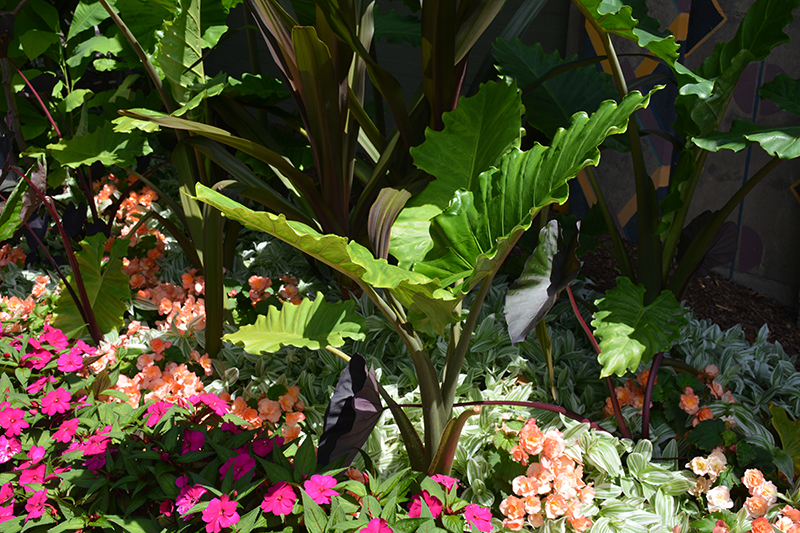
Amazing super large leaves grow from the center of this giant taro; elegant as a large accent or screening; can tolerate some cold and grows well in containers
Features & Attributes
Elephant's Ear features solitary conical creamy white hooded flowers with white centers rising above the foliage in mid summer. Its attractive large glossy heart-shaped leaves remain dark green in color throughout the year.
This is an open herbaceous evergreen houseplant with an upright spreading habit of growth. This plant usually looks its best without pruning, although it will tolerate pruning.
Planting & Growing
When grown indoors, Elephant's Ear can be expected to grow to be about 6 feet tall at maturity, with a spread of 5 feet. It grows at a medium rate, and under ideal conditions can be expected to live for approximately 5 years. This houseplant will do well in a location that gets either direct or indirect sunlight, although it will usually require a more brightly-lit environment than what artificial indoor lighting alone can provide. It is quite adaptable, prefering to grow in average to wet conditions, and will even tolerate some standing water. The surface of the soil should be kept consistently moist all of the time, and you should expect to water this plant two or more times each week, especially if it's growing in a low-humidity environment. Be aware that your particular watering schedule may vary depending on its location in the room, the pot size, plant size and other conditions; if in doubt, ask one of our experts in the store for advice. It is not particular as to soil type or pH; an average potting soil should work just fine. Be warned that parts of this plant are known to be toxic to humans and animals, so special care should be exercised if growing it around children and pets.
There are many factors that will affect the ultimate height, spread and overall performance of a plant when grown indoors; among them, the size of the pot it's growing in, the amount of light it receives, watering frequency, the pruning regimen and repotting schedule. Use the information described here as a guideline only; individual performance can and will vary. Please contact the store to speak with one of our experts if you are interested in further details concerning recommendations on pot size, watering, pruning, repotting, etc.





Plant lists (elsewhere on our site):
Popular searches:



Searching:
In keyword searches, precede the keyword with a “+” to only include plants and a “-” to exclude any plants that contain that keyword.
Enclose any phrase in quotation marks ““ to search for the phrase and not the individual words.
• Use “Quick Search” with “Search By Plant Names” to find plants that meet your criteria
• Use “Category links” to quickly find a grouping of plants
• Use “Advanced Search” to narrow the results within each category
• Use the “Hot Button” check box to prioritize a search attribute
My Wish List:
• Use the “Wish List” check box to save plants of interest for future reference
• Print out your list and bring it to the nursery as a shopping list
Remember, we may not currently have all the plants you choose in stock.