

This library and any plant lists generated from it reflect plants we’ve carried or could obtain over the past 12–18 months, not our current inventory or availability.
“Fire Wise” plants are not fireproof. These plants, when maintained properly, have a higher fire resistance reducing fire danger. This list is built on the recommendations of local governments and the Diablo Firesafe Council


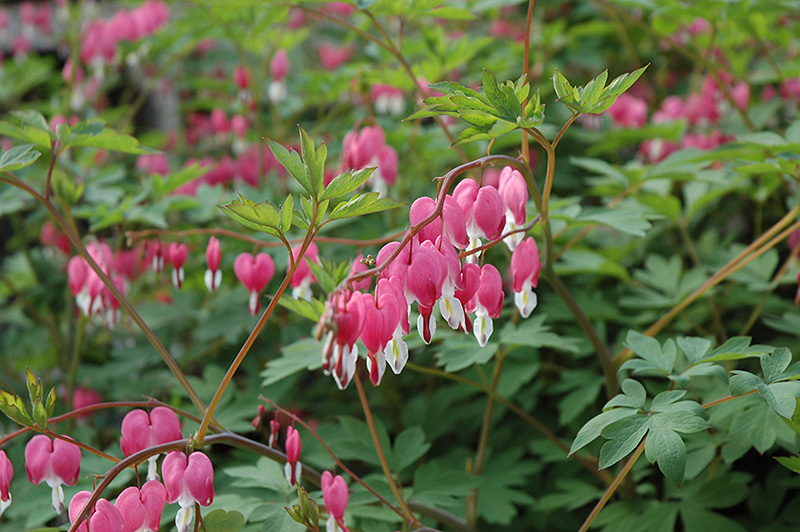
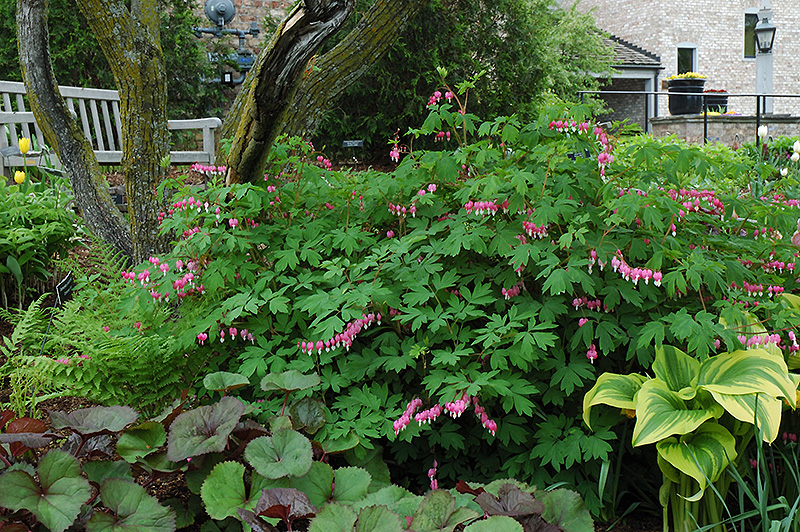
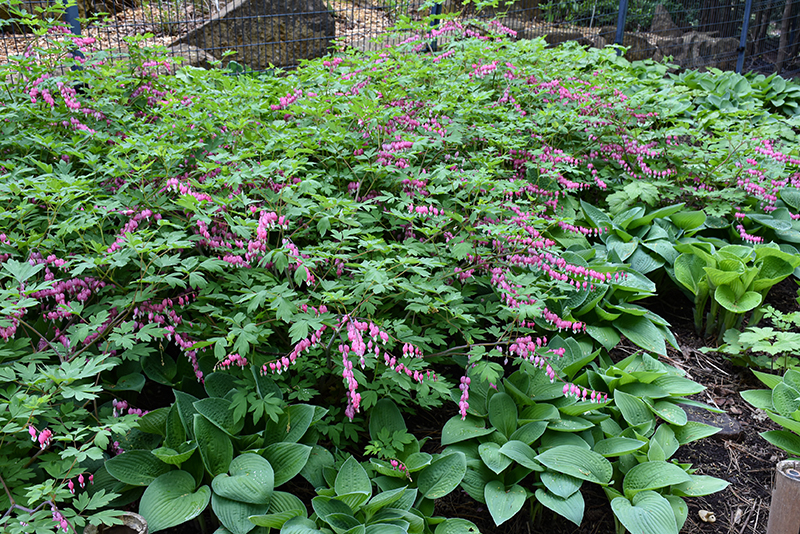
Height: 3 feet
Spacing: 30 inches
Sunlight:


Hardiness Zone: 1b
Other Names: Old Fashioned Bleeding Heart
Description:
Bushy upright mounded selection features blue-green fern-like foliage and arching stems of heart shaped locket flowers with white protruding petals; excellent for shaded borders and beds; beautiful cut flower; goes into summer dormancy
Ornamental Features
Common Bleeding Heart features delicate nodding pink heart-shaped flowers with white tips dangling from the stems from late spring to early summer. Its ferny compound leaves remain bluish-green in color throughout the season.
Landscape Attributes
Common Bleeding Heart is an herbaceous perennial with a mounded form. Its relatively fine texture sets it apart from other garden plants with less refined foliage.
This plant will require occasional maintenance and upkeep, and should be cut back in late fall in preparation for winter. It is a good choice for attracting butterflies to your yard, but is not particularly attractive to deer who tend to leave it alone in favor of tastier treats. It has no significant negative characteristics.
Common Bleeding Heart is recommended for the following landscape applications;
- Mass Planting
- General Garden Use
Planting & Growing
Common Bleeding Heart will grow to be about 3 feet tall at maturity, with a spread of 3 feet. When grown in masses or used as a bedding plant, individual plants should be spaced approximately 30 inches apart. It grows at a medium rate, and under ideal conditions can be expected to live for approximately 15 years. As an herbaceous perennial, this plant will usually die back to the crown each winter, and will regrow from the base each spring. Be careful not to disturb the crown in late winter when it may not be readily seen! As this plant tends to go dormant in summer, it is best interplanted with late-season bloomers to hide the dying foliage.
This plant does best in partial shade to shade. It prefers to grow in average to moist conditions, and shouldn't be allowed to dry out. It is not particular as to soil pH, but grows best in rich soils. It is somewhat tolerant of urban pollution. Consider applying a thick mulch around the root zone over the growing season to conserve soil moisture. This species is not originally from North America. It can be propagated by division.






Plant lists (elsewhere on our site):
Popular searches:



Searching:
In keyword searches, precede the keyword with a “+” to only include plants and a “-” to exclude any plants that contain that keyword.
Enclose any phrase in quotation marks ““ to search for the phrase and not the individual words.
• Use “Quick Search” with “Search By Plant Names” to find plants that meet your criteria
• Use “Category links” to quickly find a grouping of plants
• Use “Advanced Search” to narrow the results within each category
• Use the “Hot Button” check box to prioritize a search attribute
My Wish List:
• Use the “Wish List” check box to save plants of interest for future reference
• Print out your list and bring it to the nursery as a shopping list
Remember, we may not currently have all the plants you choose in stock.